 Trustpilot - Rated Excellent
 In-house Design & Print
 Express Production Options
 Instant Credit for Businesses
  Newsletter

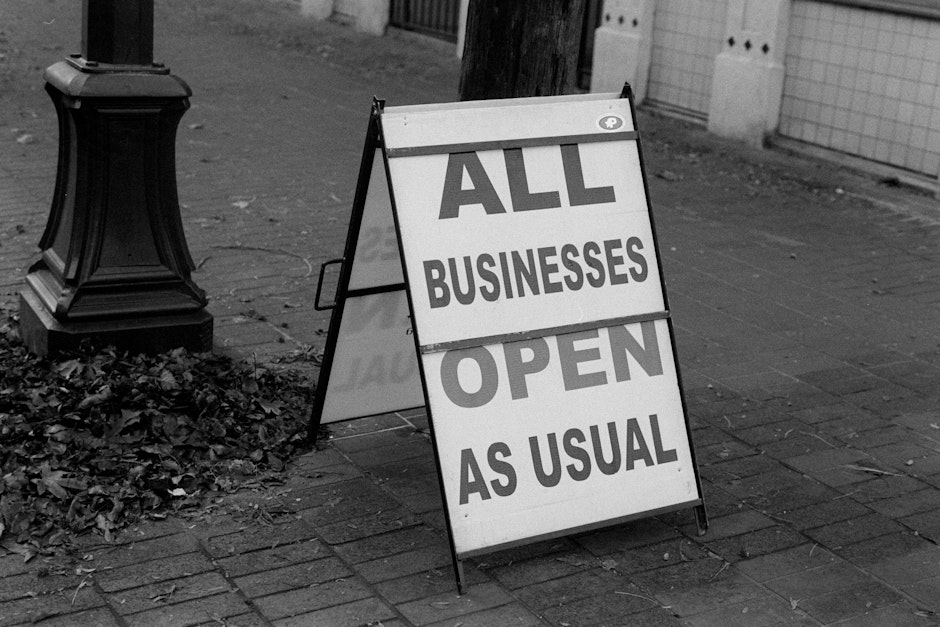
Pavement signs, A-boards and sandwich boards can be useful for promoting a business, but the rules depend on where the sign is placed. A sign on a public road or pavement may need permission from the local council, and advertisement consent can be a separate consideration.
This guide gives general information about the main checks to make before displaying a pavement sign. Local requirements vary, so always confirm the rules that apply to your location.


Start with where the sign will be placed
The first question is whether the pavement sign will sit on private land or on a public road or pavement. If you want to place an advertising sign on a public road or pavement in England or Wales, GOV.UK advises contacting the local council to find out whether you need a pavement or street display licence.
The licence conditions, fees and permitted locations can vary by council. Do not assume that rules published by one local authority apply in another area.
Check pavement or street display licensing on GOV.UK.
Advertisement consent is a separate consideration
Outdoor advertising is also controlled through the planning system. Some advertisements do not require express consent, some benefit from deemed consent, and others require express advertisement consent from the local planning authority.
The rules depend on the type, size, position and other characteristics of the sign. If you are unsure whether your pavement sign needs advertisement consent, check with your local planning authority before displaying it.
Read the GOV.UK guidance on advertisements and the Planning Portal guidance on adverts and signs.
Avoid universal clearance or size assumptions
There is no single clearance distance or A-board size rule that should be copied across every council area. Local authorities can set conditions for street displays, including where a sign can be positioned and how much clear pavement space must remain.
Check the requirements for the exact council area where the sign will be used before choosing the final size or position.
Keep the sign safe and accessible
A pavement sign should not create an obstruction or make the highway unsafe. Consider pedestrians, wheelchair users, people using mobility aids, pushchairs and other pavement users when choosing its position.
Outdoor advertisements are also subject to safety conditions. They must not obscure or hinder the interpretation of official road, rail, waterway or aircraft signs, or otherwise make those forms of transport hazardous.
Use the product-specific instructions for weighting and outdoor use, and bring the sign indoors when weather conditions exceed the guidance for the chosen model.
Check for additional local restrictions
Extra controls may apply in locations such as conservation areas or at listed buildings. The sign itself, its position and the property it is associated with can all affect which permissions are needed.
If you are unsure, contact the relevant council or local planning authority before ordering or displaying the sign.
Before you order
Confirm whether the proposed position is private land or public highway.
Check with the local council whether a pavement or street display licence is required.
Check whether advertisement consent or another planning consent applies.
Confirm any local size, clearance, operating-time or placement conditions.
Choose a pavement sign that suits the permitted location and follow its product-specific setup and weather guidance.
Once you have confirmed the local requirements, compare our pavement signs, including A-board signs, swing pavement signs and forecourt signs.
This guide is general information and does not replace advice from your local authority.
posted in Marketing Advice
Published: | Updated:


Written By:
Matthew Pavli
Matthew Pavli is a Digital Marketing Consultant at Display Wizard, a UK-based supplier of professional banner stands, pop up displays and exhibition stands. He helps entrepreneurs and businesses across the country stand out at trade shows and events.
Share this Event